The Real Cost of Storm-Related IT Outages
Summer brings warmer weather, but it also brings severe storms, lightning, and heatwaves that put extreme stress on local power grids. For businesses, a sudden blackout or power surge can result in data corruption, fried server motherboards, and extended downtime. According to FEMA, nearly 40% of small businesses never reopen after a major disaster or prolonged outage, primarily due to the catastrophic loss of operational data and client records.
Preparing your business technology for storm season requires going beyond basic surge protectors. It demands a proactive strategy combining robust power management, structured off-site backups, and a clear disaster recovery playbook.
The True Cost of Downtime
When IT systems go offline, business stops. Employees cannot access email or shared files, transactions cannot be processed, and clients are left without support. Aberdeen Group studies show that the average hourly cost of downtime for a small business ranges from $8,500 to over $24,000 for mid-sized organizations. These losses pile up quickly from lost sales, idle labor, and the emergency engineering fees required to rebuild systems.
Infographic
Average Hourly Cost of IT Downtime
Estimated business losses (productivity, revenue, recovery) per hour of system outage.
Local Backup vs. Cloud Disaster Recovery: What’s the Difference?
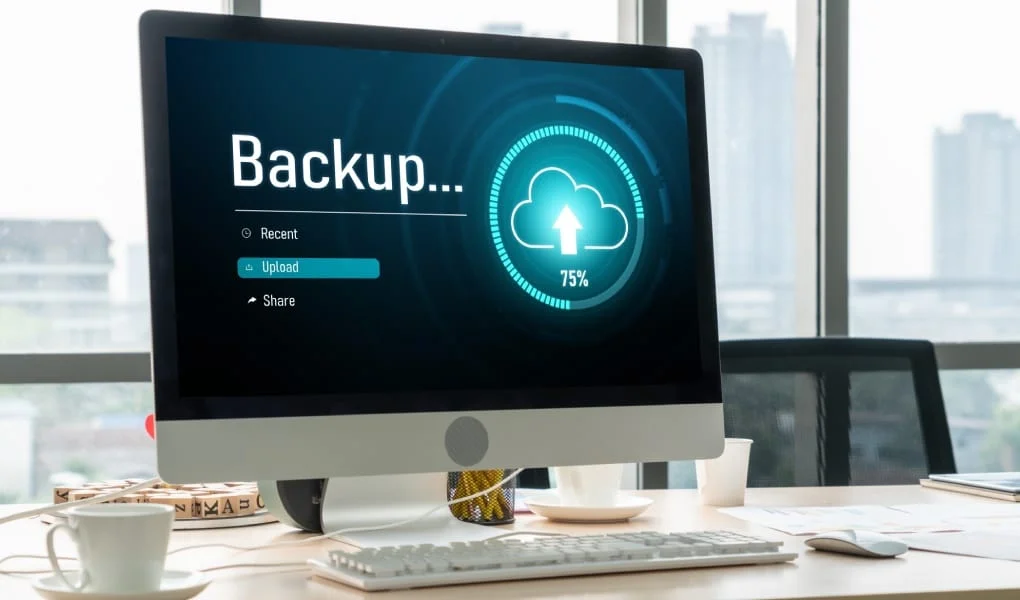
Many business owners state, "I don't need to worry about storms because I back up to an external hard drive in the office." While a local backup is useful for quickly restoring a single deleted file, it fails in a physical disaster. If your office suffers a power surge, lighting strike, flooding, or physical damage, the local backup drive sitting on the server shelf will likely be destroyed along with the server itself.
Cloud Disaster Recovery (DR) takes a different approach by duplicating your entire server and data environment to a secure, off-site cloud data center. In the event of a physical emergency, your IT team can spin up your systems in the cloud, allowing employees to log in and work remotely from any location with internet access, even if your physical office is completely inaccessible.
3 Steps to Storm-Proof Your IT Infrastructure
To ensure your business remains resilient through summer storms, implement these three foundational steps:
1. Deploy Uninterruptible Power Supplies (UPS)
A UPS serves as a buffer between the wall outlet and your sensitive network equipment. It protects servers and switches from sudden voltage fluctuations and provides battery backup power. This battery backup gives your systems enough time to shut down gracefully without data corruption if the power fails completely.
2. Enforce the 3-2-1 Backup Strategy
To eliminate single points of failure, keep at least three copies of your data. Store them on two different media types (e.g., local server storage and network attached storage), with at least one copy stored securely off-site in the cloud.
3. Establish a Remote Work Playbook
If your primary office loses power for days, your team must know how to work from home. Ensure your cloud-based tools, VOIP phone systems, and secure VPN connections are fully configured and tested before a storm hits.
✅ Get Prepared: Don't wait for the next major storm to test your resilience. Contact the team at Spot On Tech to review your setup and implement a bulletproof managed data backup and disaster recovery solution today.